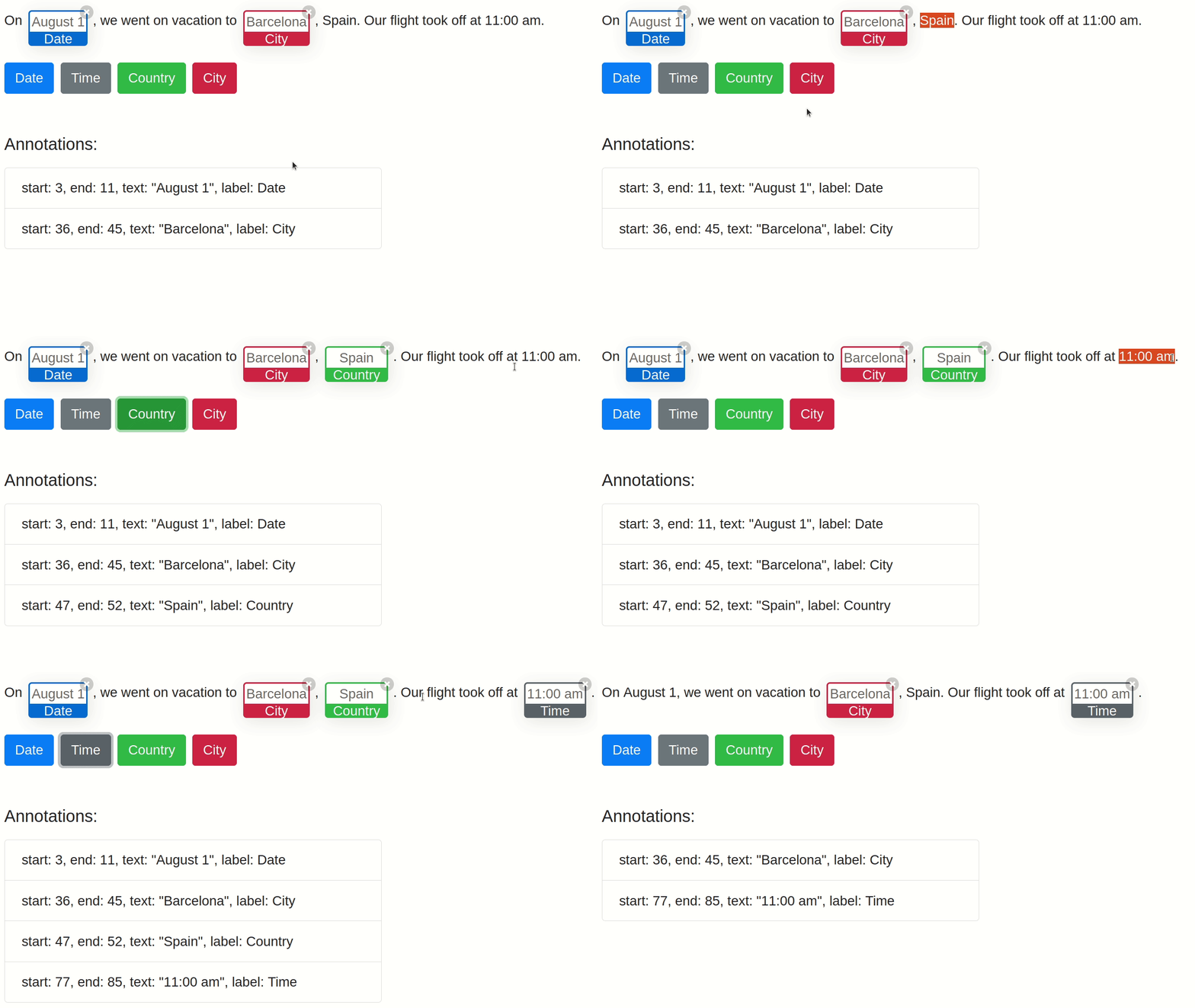
Text Annotations
In this process a user deliberately interacts with a text to enhance the it’s understanding, recall, and reaction to the text. It usually involves highlighting or underlining key pieces of text to ensure that you understand what is happening in a text after you've read it.
What we do: An overview
We use human annotators to label text data, since they are especially valuable in analysing sentiment data, as this can often be nuanced and is dependent on modern trends in slang and other uses of language. The route we take will depend on the complexity of the problem you’re trying to solve.
As we annotate, we usually note the author's main points, shifts in the message and perspective of the text, these are our key areas of focus.
We use different types of text annotations within computer vision:
Sentiment Annotation:
In this annotation we evaluate attitudes and emotions behind a text by labelling that text as positive, negative, or neutral.
Intent Annotation:
Here we analyse the need or desire behind a text, classifying it into several categories, such as request, command, or confirmation.
Semantic Annotation:
In this category, we attach various tags to text that reference concepts and entities, such as people, places, or topics.