Video Annotations
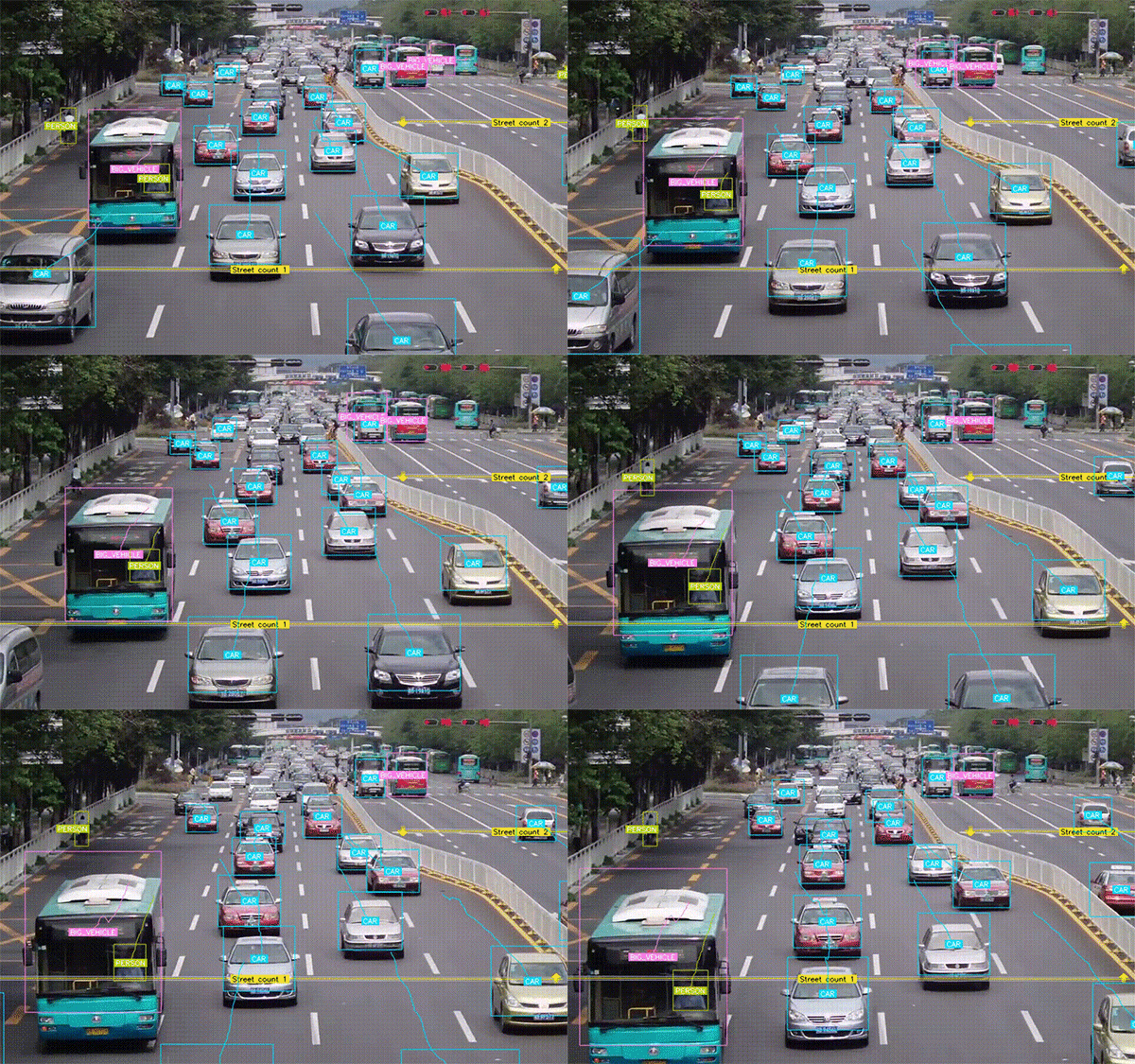
It is the process of adding annotations to videos. The main purpose of video annotation is to make it easier for computers that utilise AI-powered algorithms to identify objects in videos.
What we do: An overview
In the process of video annotation we label or tag video clips which are used for training computer vision models to detect or identify objects. Unlike image annotation, video annotation involves annotating objects on a frame-by-frame basis to make them recognizable for machine learning models.
Our team works with the client to calibrate the quality and throughput of the job and deliver the best cost-quality ratio as you iterate. We recommend running a sample batch to clarify instructions, edge cases, and approximate task times, before launching full batches.
The most common techniques we use in video annotation for AI are: Bounding boxes, ellipses, polygons, keypoints, landmarks, 3D cuboids etc.
We use different types of video annotations within computer vision:
Detection
Our annotated dataset can be trained by the AI model to detect objects in video footage. For instance, it can be used to detect cars, road damage, or animals.
Tracking
The AI model can track objects in video footage and predict their next location. Object tracking comes in extremely handy for tasks such as monitoring pedestrians or vehicles for security purposes.
Location
Our dataset can be trained by an AI model to find objects in video footage and to provide coordinates. This can be used, for instance, for monitoring occupied and unoccupied parking spaces or coordinating air traffic.
Segmentation
By creating different classes the data can be trained by AI models to recognize and categorise different objects. For example, you can create an image segmentation system that uses video footage to group and count ripe and unripe the fruits such as bananas, berries etc.